
Evangeline Parish Arrest Warrants Explained
An arrest warrant lets officers take a named person into custody on a charge. It grows out of a written accusation that a judge has reviewed for probable cause. The paper itself commands an arrest and a booking of the person it names. The Louisiana Code of Criminal Procedure sets the legal framework, and the sheriff's warrant policy covers how Evangeline Parish handles the paper once a court sends it over. Neither document will say whether a warrant exists in a particular case. For that, the file itself has to be checked. So the statutes tell you how the process works, not where you stand in it. The check still falls to the court that issued the paper.
The Evangeline Parish Warrant Complaint Process
In Evangeline Parish the complaint process starts with a sworn statement describing the offense and the person accused. A magistrate then weighs whether probable cause supports issuing process at all. From there the path runs in a straight line: complaint and affidavit, probable-cause review, a written warrant, then delivery to the agency that will serve it. Every stage leaves a document behind. Every stage can also be the reason an office tells a caller to try a different desk. La. C.Cr.P. art. 202 governs the complaint stage, and art. 203 governs the warrant itself.
Inside an Evangeline Parish Arrest Warrant
The statute on warrant form spells out exactly what the paper must show. In Evangeline Parish, those listed fields are what a clerk, an officer, and an attorney each read first when a case comes up.
| Issuing Place and Date | The parish or municipality and the date the court signed the warrant. |
|---|---|
| Person Identified | The name and any description the complaint supplies, kept to the record's own terms. |
| Offense | The charge described in the complaint, not a full case narrative. |
| Command to Arrest | The instruction directing an officer to arrest and book the person. |
| Bail Instruction | Present only when the issuing court set one, shown as a bail term. |
| Court Reference | The docket or case number that ties the paper to a file, logged as a docket entry. |
The May 2024 Evangeline Parish Arrest Counts
The sheriff publishes monthly arrest data sorted by category. One Evangeline Parish category is labeled Warrant. That label tells you how an arrest was classified during the reporting period, not how many warrants were open.
The aggregate arrest page covers a single month and names no individuals.
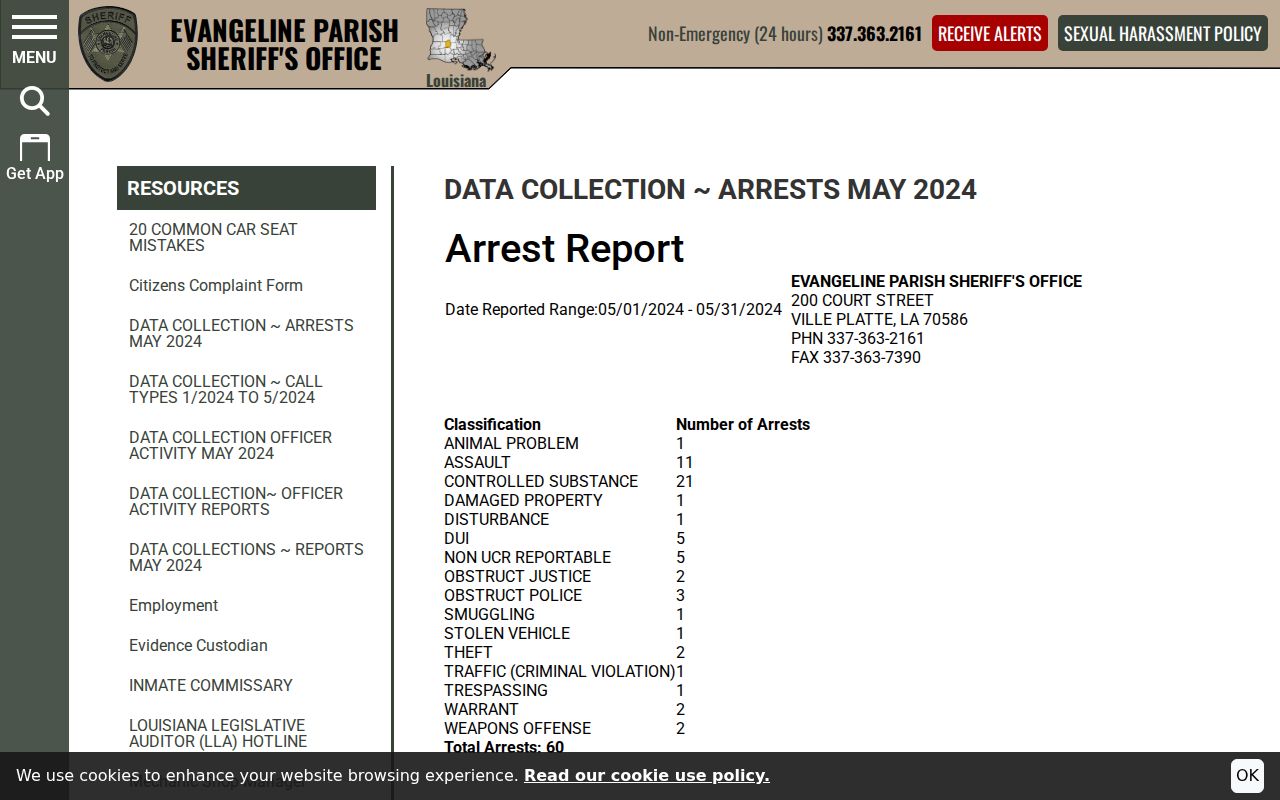
A category total in Evangeline Parish cannot become a count of people with open warrants. It also says nothing about any single case.
Serving Arrest Warrants in Evangeline Parish
Sworn peace officers execute process in Evangeline Parish. The Criminal Process Unit receives warrants from courts and justice-of-the-peace offices, then assigns them by service area. Once the paper is served or the attempt is documented, the unit files a return.
Evangeline Parish Sheriff, Criminal Process Unit
415 W Cotton St., Ville Platte, LA 70586
337-363-2161
Receives, validates, assigns, serves, and returns court process.
In Evangeline Parish, returns go in the same day or the next working day. A non-execution return has to state why service did not happen.
Evangeline Parish Arrest Warrants That Travel
Paper that belongs outside the 13th Judicial District area gets forwarded to the jurisdiction that owns it. Evangeline Parish images warrants from other parishes for local reference. That routing explains why a local search cannot answer a question about a court somewhere else. Some warrants qualify for statewide entry or extradition approval. Those may be entered into NCIC at the request of the district attorney or a foreign jurisdiction. NCIC is a law-enforcement system closed to public queries.
Note: A blank result from a parish search never establishes that no warrant exists in another jurisdiction.
Comparing Arrest, Summons, and Bench Warrants
Three kinds of process can reach the same person in Evangeline Parish, and each carries different obligations. The label on the paper decides which office you call and what happens at the courthouse.
| Process | How It Begins | What Follows |
|---|---|---|
| Arrest warrant | Complaint and probable-cause finding | An officer may take the person into custody |
| Summons | A charging decision in a specified misdemeanor or traffic case | A notice to appear without an immediate arrest command |
| Bench warrant | A missed court date or a violated directive | Court process attached to an existing case |
Article 211.1 lets an officer use a summons in some Evangeline Parish cases. The word may matters: a summons is an option, not a guarantee.
Federal Warrants and Evangeline Parish Cases
Evangeline Parish sits in the Lafayette division of the Western District of Louisiana. Federal process belongs to federal court. A state or parish search cannot confirm a federal warrant. The local warrant policy does not expose federal records either. The federal fee schedule shows how public case records are priced, and the Lafayette division page lists the courthouse contact.
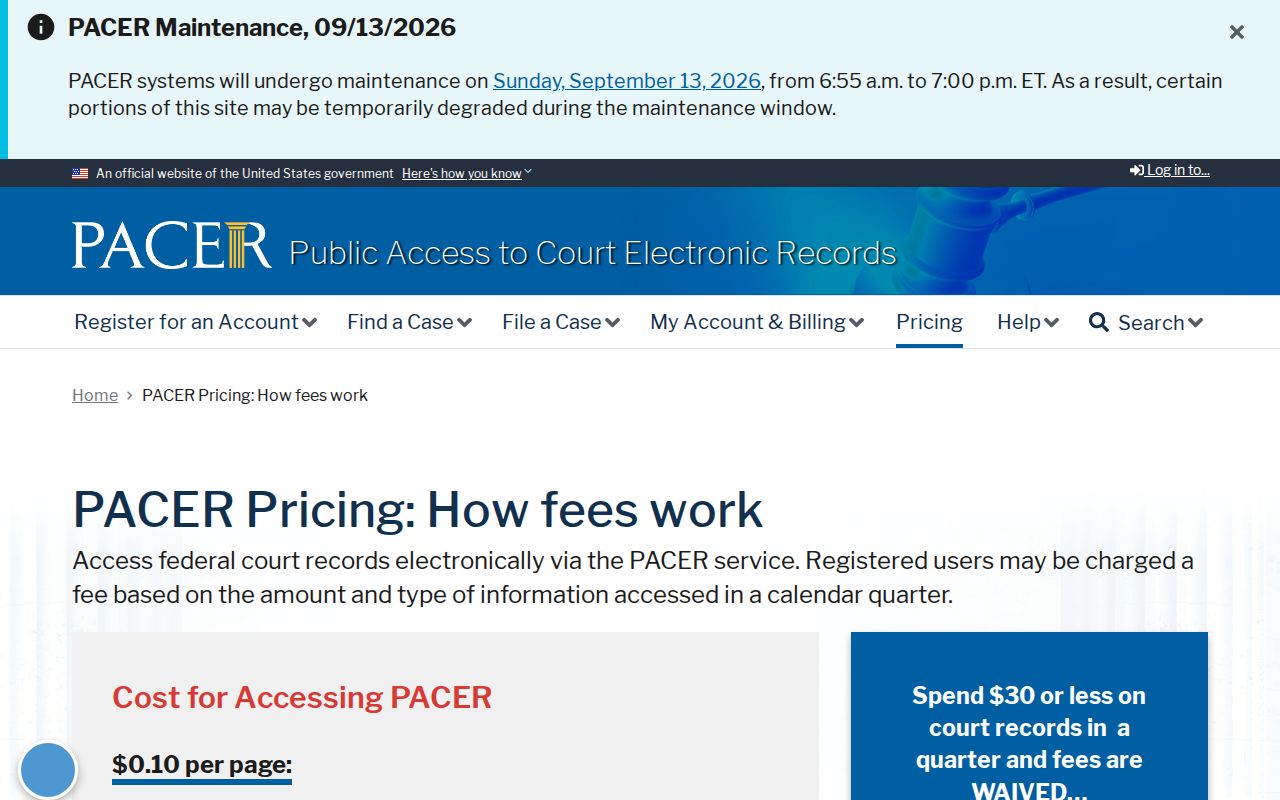
Sealed federal filings never appear in a public Evangeline Parish search. A missing result is not a clearance.
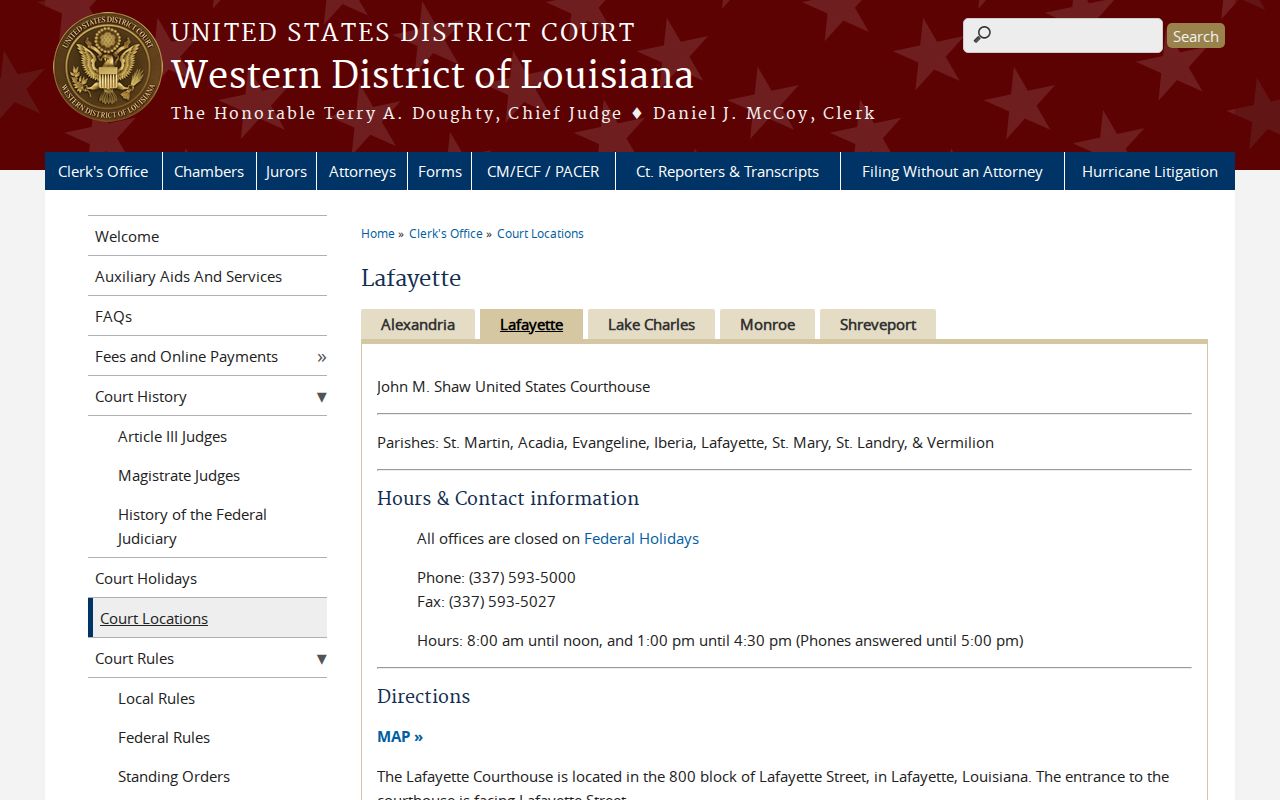
Federal fugitive service runs through the U.S. Marshals. That route is separate from the Evangeline Parish unit.
If There's an Arrest Warrant for You
An open arrest warrant changes how ordinary situations end. A traffic stop, a routine contact, or a visit to a government office in Evangeline Parish can turn into a booking. So the timing of any next step deserves a lawyer's review.
Important: Contact a licensed attorney before you surrender. Counsel can confirm the issuing court, the bond instruction, and whether the court will accept a voluntary appearance.
Bring the docket number and the charge description to that first conversation in Evangeline Parish. Ask the court whether any separate hold or bond condition applies.
Verifying an Evangeline Parish Arrest Warrant
The sheriff's policy calls for two checks before service in Evangeline Parish: a computer validation and a review with the district attorney's office during working hours. The stated purpose is to avoid false arrests. Those checks are internal safeguards. A caller should not expect their details over the phone. What a reader can ask is simpler. Which court issued the process, whether it is still active, and when it was last confirmed.
Note: Ask the court for the verification date rather than relying on the date an entry was created.